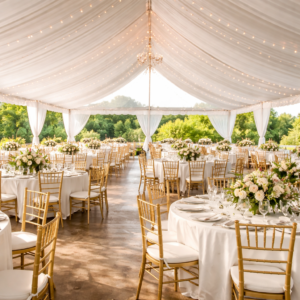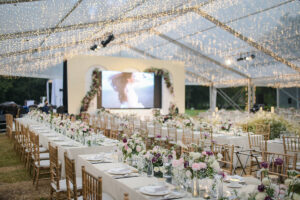

Hosting an event outdoors requires a safeguard against the elements. The tent is both shelter and the skeleton of your event space, defining the atmosphere and ensuring guest comfort regardless of the forecast.
Choosing the right tent involves more than just guessing the number of people and picking a canopy. It requires a balance of aesthetics, logistics, terrain analysis, and mathematical precision.
Whether you are looking to rent tents in Niagara or planning a gathering elsewhere in the region, this guide will walk you through the essential steps to securing the perfect structure for your needs.
1. Decoding the Tent Types
Before worrying about dimensions, you must decide on the style of the tent. Different structures serve different functional needs and offer distinct visual vibes.
Pole Tents: The Classic Silhouette
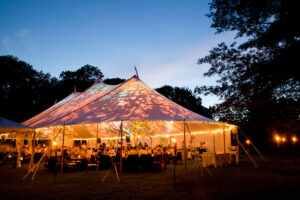
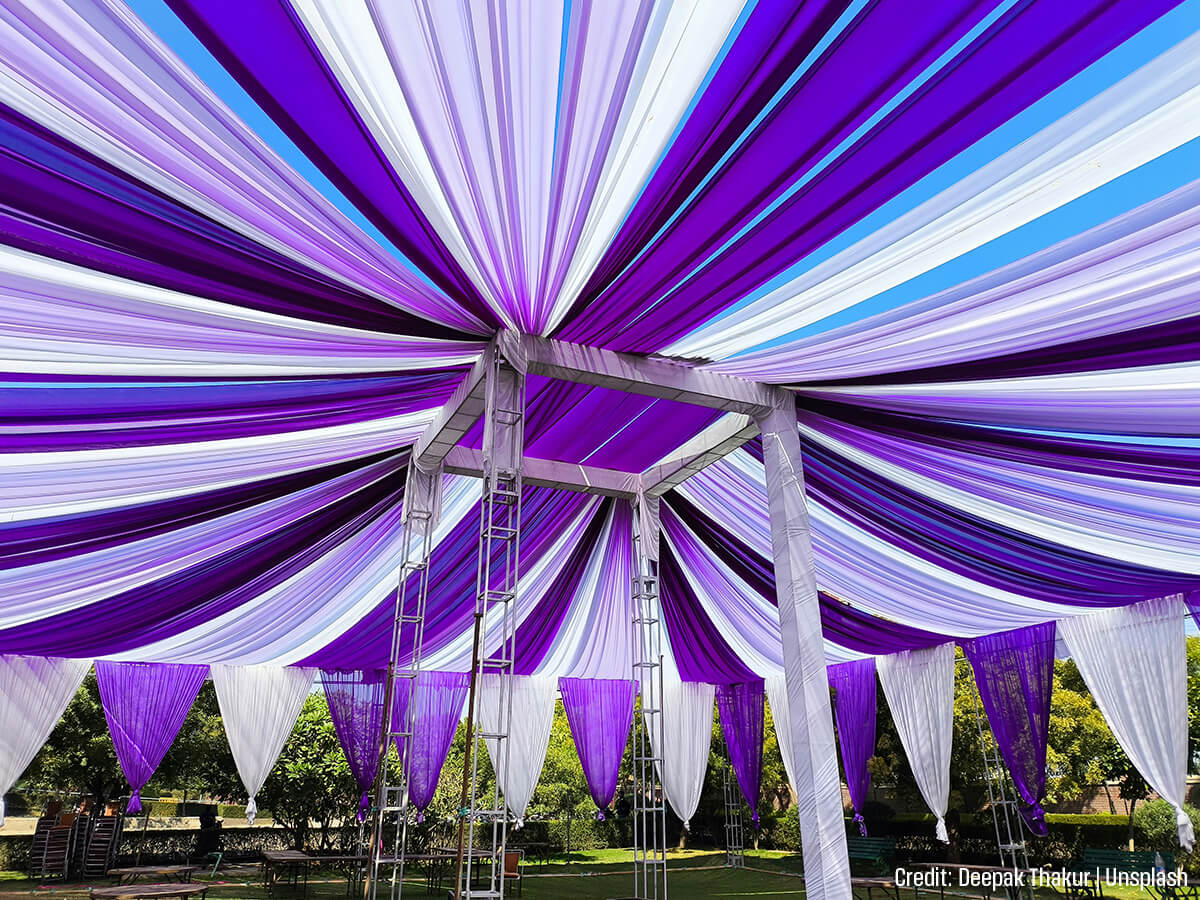
Pole tents are the quintessential party tents. They are characterized by high, sweeping peaks and plunging lines that create a dramatic, elegant exterior.
- How they work: The roof is supported by tall center poles and tensioned by ropes staked into the ground around the perimeter.
- The Vibe: Traditional, romantic, and grand. Ideally suited for weddings and galas.
- The Catch: Because they rely on tension, they must be staked into soft ground (grass or dirt). They cannot be set up on concrete. Furthermore, they have center poles inside the tent, which can obstruct views and complicate floor planning.
Frame Tents: The Versatile Solution
Frame tents are free-standing structures that rely on a metal tubular framework to support the canopy rather than internal poles.
- How they work: The metal skeleton is assembled first, and the fabric is fitted over it. Because they don't rely on tension stakes for structural integrity, they can be weighted down.
- The Vibe: Clean, open, and unobstructed.
- The Catch: They generally do not have the dramatic high peaks of a pole tent (though "High Peak" frame options exist). However, the interior is completely open, meaning no center poles to dodge when placing dance floors or tables. They are perfect for driveways, patios, decks, or concrete surfaces.
High-Peak Marquee Tents
If you love the look of a pole tent but need the versatility of a frame tent, the High-Peak Marquee (or Cross Cable) tent is the hybrid solution.
- How they work: These utilize a frame system but use a flying center pole suspended by cross cables to push the roof up, creating a peak without the pole touching the ground.
- The Vibe: Modern elegance. These offer the best of both worlds: the aesthetic peak of a pole tent with the open floor plan of a frame tent.
Pop-Up Canopies
These are lightweight, collapsible tents usually found in 10x10 sizes.
- Use Case: Strictly for ticket booths, food vendors, or small backyard shade. They are not recommended for main dining areas or formal events due to their lack of structural durability against wind and rain.
2. Calculating the Size: The Math of Comfort
Determining the size of your tent is the most critical logistical step. A tent that is too small leads to claustrophobia and overheating; a tent that is too large can make an event feel sparse and under-attended.
To calculate the square footage you need, you must look beyond the guest count and consider the activity.
Basic Square Footage Rules of Thumb
- Stand-Up Cocktail Parties: Allow 6 to 8 square feet per person. This allows room for standing tables and mingling but assumes no seated dining.
- Ceremony Seating (Theatre Style): Allow 8 to 10 square feet per person. This accommodates rows of chairs with an aisle.
- Seated Dinner (Rectangular Tables): Allow 10 to 12 square feet per person.
- Seated Dinner (Round Tables): Allow 12 to 14 square feet per person. Round tables generally take up more floor space but allow for better conversation.
The "Add-Ons" Calculation
The numbers above only account for the humans. You must add square footage for every non-human element you introduce under the canvas.
- Buffet Tables: Add 100 sq. ft. per buffet line.
- Bar Area: Add 150 sq. ft. for a standard bar setup.
- DJ or Band: A DJ needs about 50–100 sq. ft., while a full band may require a stage and could need 200–400 sq. ft.
- Dance Floor: The rule of thumb is that 50% of your guests will dance at one time. Allow 4–5 sq. ft. per dancer. (E.g., for 100 guests, plan for 50 dancers = roughly a 15x15 ft dance floor).
3. Surface and Site Inspection
Before you book, you must assess the ground beneath your feet. The surface dictates the anchoring method, which affects the safety and cost of the rental.
Grass and Dirt
This is the most cost-effective surface. Installers can drive long steel stakes into the ground to secure the tent. Always call your local utility dig-line service before the event to ensure stakes won't hit gas or water lines.
Concrete, Asphalt, and Decks
You cannot stake into these surfaces without damaging them. Instead, installers must use water barrels or heavy concrete blocks (ballasts) to secure the tent. Note that ballasts are often an additional rental cost and are physically heavy to transport. You generally must use Frame Tents for these surfaces.
Elevation and Obstructions
Look up! Are there low-hanging tree branches or power lines? A high-peak tent requires significant vertical clearance. Look down! Is the ground level? A severe slope makes seated dining uncomfortable and dance floors dangerous. You may need to rent sub-flooring to level the space, which is a significant line item in the budget.
4. Walls, Windows, and Weather Proofing
A tent roof protects against the sun and vertical rain, but wind and sideways rain require sidewalls.
- Solid White Walls: Great for hiding unsightly backdrops (like a garage or parking lot) and blocking the sun.
- Cathedral/Window Walls: These feature vinyl windows that let in natural light and allow guests to see the view while staying warm.
- Clear Walls: These offer a panoramic view but can create a "greenhouse effect" on hot days, trapping heat inside.
Tip: Always rent sidewalls if there is even a slight chance of wind or rain. You can usually leave them rolled up if the weather is nice, but you cannot install them mid-event if you didn't rent them.
5. Integrating Your Rentals
A tent is rarely rented in isolation. It is part of an ecosystem of equipment. When browsing inventory, it is helpful to use a single vendor who can provide the full package. Coordinating delivery times between a tent company, a table company, and a linen company can be a logistical nightmare.
When you rent chairs, tables, tents, and other event rentals in Niagara, look for a vendor that understands the relationship between these items. For example, the leg width of the chairs you choose dictates how many can fit around the tables, which in turn dictates the size of the tent required. A vendor supplying all these items can visualize the layout cohesively, ensuring that the round tables you rented actually fit inside the frame tent you selected.
Plan Your Event With the Right Equipment
The right tent acts as an insurance policy for your event, protecting your guests and your investment. Make your next outdoor event unforgettable with high-quality equipment and professional service. We have everything you need to create the perfect setting.
Contact RentPartyShop today! Call us at: +16475717104.